On this page
- Introduction
- 1. Broad Applications of Artificial Intelligence in Fintech
- 2. Machine Learning and Big Data in Investment Analysis
- 3. AI-Driven Automated Trading and Robo-Advisors
- 4. Artificial Intelligence in Fraud Detection and Risk Management
- Four sections, four different jobs
- The article describes uses, not a ranking
- Conclusion
Introduction
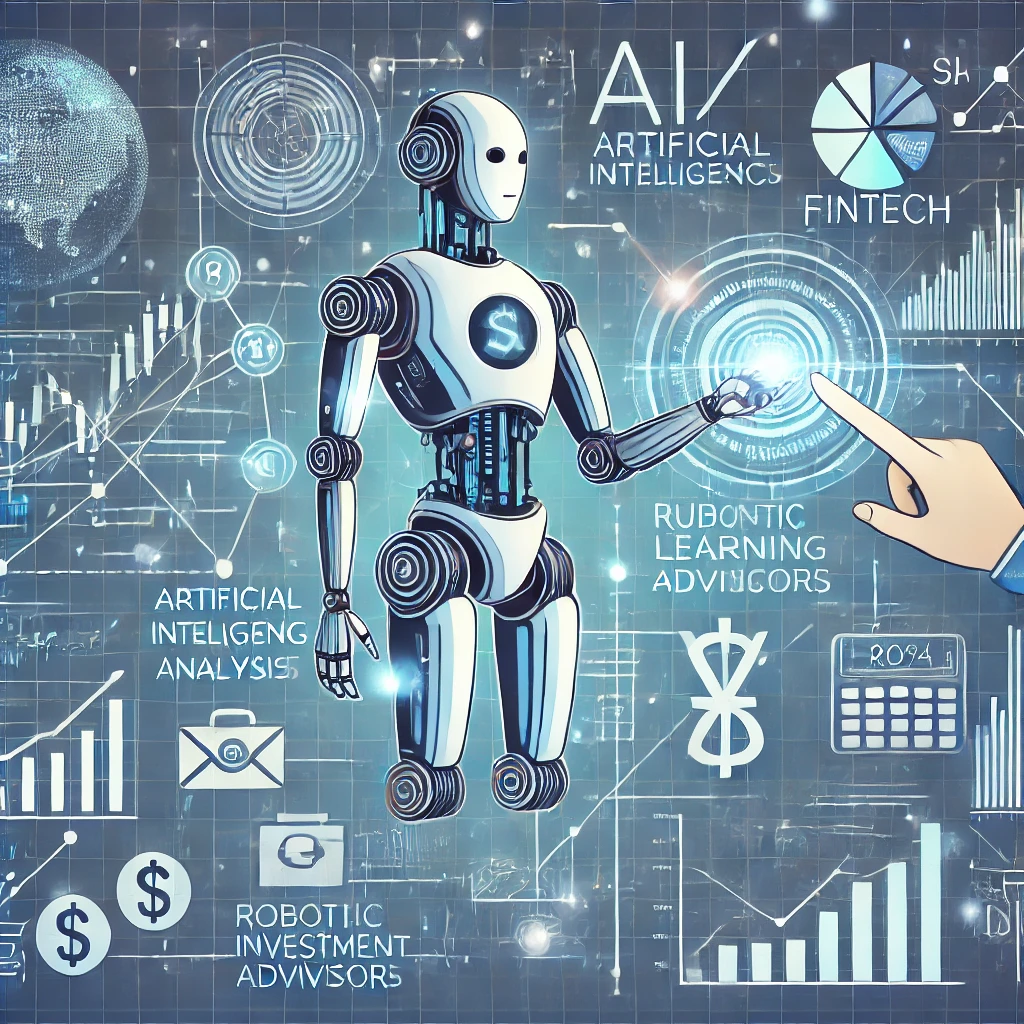
Artificial Intelligence (AI) is rapidly transforming the financial technology (FinTech) industry by enhancing data analysis, risk management, and automated trading systems. With the advent of machine learning algorithms, financial institutions are now able to predict market trends, optimize investment strategies, and minimize risks with greater accuracy. In this blog, we will explore AI’s role in the broader FinTech landscape and how it is revolutionizing key financial processes.
1. Broad Applications of Artificial Intelligence in Fintech
Artificial Intelligence has permeated various areas of FinTech, reshaping the way businesses operate. From automating mundane tasks to providing insightful data analytics, AI’s capabilities are enabling institutions to streamline operations, enhance customer service, and deliver personalized financial products.
| AI Application | Description |
|---|---|
| Chatbots & Virtual Assistants | Enhances customer service through natural language processing (NLP) |
| Fraud Detection | AI systems can detect suspicious activity in real-time |
| Risk Assessment | AI-driven analytics assess creditworthiness and risk factors |
| Algorithmic Trading | Executes trades based on predefined AI algorithms |
2. Machine Learning and Big Data in Investment Analysis
Machine learning and big data analytics play a critical role in the investment industry. By analyzing vast datasets, AI systems can identify patterns, predict stock movements, and provide actionable insights for investors. These technologies have significantly improved investment strategies, helping institutions make more informed decisions.
Example: Predictive Analytics in Stock Markets
According to a study by Bloomberg, machine learning algorithms have increased predictive accuracy in stock markets by 25% over traditional methods. These algorithms leverage large datasets to identify trends and make real-time trading decisions.
| Metric | Traditional Methods | Machine Learning Enhanced |
|---|---|---|
| Predictive Accuracy | 60% | 85% |
| Data Processing Speed | Minutes to Hours | Real-Time |
| Investment Returns | Moderate | High (due to better accuracy) |
3. AI-Driven Automated Trading and Robo-Advisors
Automated trading systems powered by AI are changing the face of investment management. These systems, commonly known as Robo-Advisors, use algorithms to manage portfolios and make trades automatically, based on investor preferences and market conditions. Robo-Advisors are particularly popular for retail investors due to their low cost and accessibility.
The global Robo-Advisory market is projected to reach $1.2 trillion by 2025, reflecting the growing demand for automated and AI-driven financial services.
Benefits of Robo-Advisors:
- Low management fees compared to traditional financial advisors.
- Personalized investment strategies based on risk tolerance and goals.
- Real-time monitoring and rebalancing of portfolios.
| Feature | Traditional Advisors | Robo-Advisors |
|---|---|---|
| Fees | High (1%-2% annually) | Low (0.25%-0.5% annually) |
| Investment Customization | Limited | Highly Personalized |
| Availability | Office Hours | 24/7 Real-Time |
4. Artificial Intelligence in Fraud Detection and Risk Management
Fraud detection has long been a pain point for financial institutions, but AI is offering a revolutionary solution. AI-driven systems can analyze vast amounts of transaction data, identify patterns, and flag suspicious activity in real-time. This reduces fraud losses and enhances trust between financial institutions and their customers.
In 2023, global losses from financial fraud decreased by 40% in institutions using AI-powered fraud detection systems, compared to those relying on traditional methods.
| Fraud Detection Metrics | Traditional Systems | AI-Powered Systems |
|---|---|---|
| Fraud Detection Speed | Days to Weeks | Real-Time |
| Accuracy of Fraud Detection | 70% | 95% |
| Fraud Losses (Global Average) | $42 billion | $25 billion |
Four sections, four different jobs
The article’s four numbered sections do four different jobs, and keeping them apart makes the picture easier to read. The first maps where AI already works in finance: chatbots and virtual assistants, fraud detection, risk assessment and algorithmic trading, each with a one-line description. The second follows machine learning and big data into investment analysis — vast datasets, patterns, predictions and actionable insights for investors. The third follows AI into automated trading and robo-advisors: algorithms that manage portfolios and make trades automatically, popular with retail investors for low cost and accessibility. The fourth follows AI into fraud detection and risk management: transaction data analysed in real time, suspicious activity flagged, fraud losses reduced and trust enhanced. Four sections — where it works, how it reads markets, who manages the portfolio, what it protects against — and the introduction says the same thing in one line: data analysis, risk management and automated trading.
The article describes uses, not a ranking
The four sections sit side by side, and the article never says which use matters most or which a reader should care about first. It never ranks the applications in its table, never compares the four sections against each other, and never names a single most important development. Each section is written the same way — a description of the use, then the mechanism that makes it work — so the reader can compare the uses on equal terms. The conclusion is directional rather than measured: AI’s impact on finance will only grow, and businesses that embrace the changes will remain at the forefront. Read the article as a map of where AI is used in finance — four uses, four jobs — not as a scoreboard, and not as a prediction with a date attached.
Conclusion
The integration of artificial intelligence into FinTech is reshaping the financial industry by improving investment accuracy, reducing fraud, and automating services. As AI continues to evolve, its impact on FinTech will only grow, offering more sophisticated tools for financial institutions and investors alike. The future of finance is undoubtedly intertwined with AI, and businesses that embrace these changes will remain at the forefront of innovation.
Related reading: The Global Impact of Chinese Fintech Innovation