
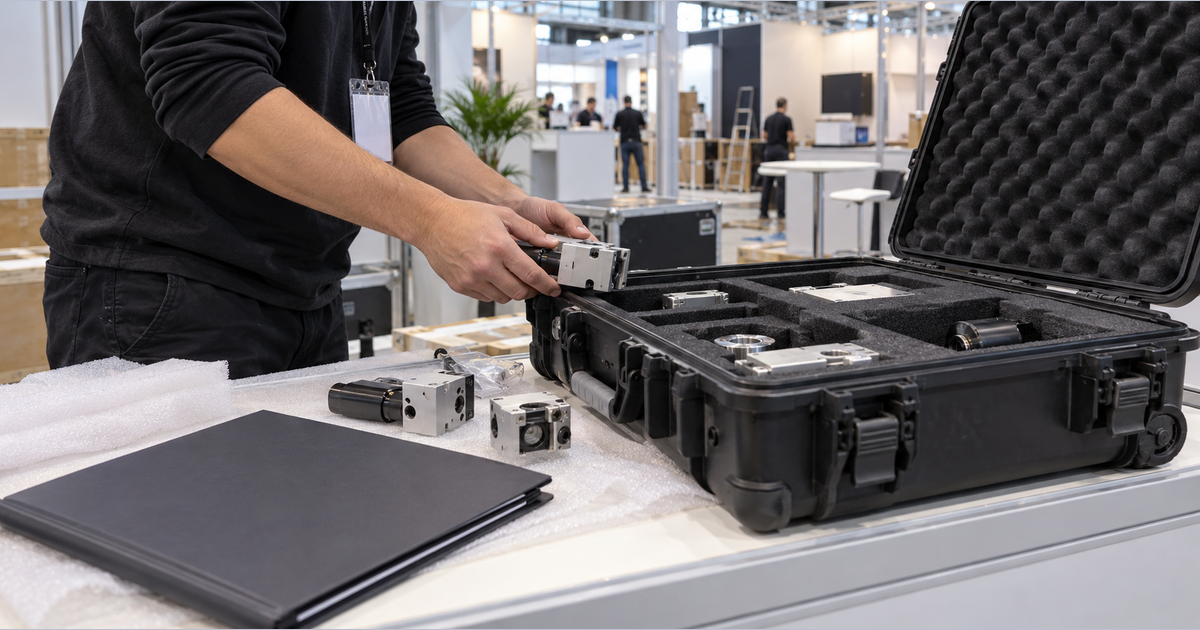
Before arranging a temporary trade-show shipment, create an item-by-item return plan and assign responsibility for the documents at every border crossing. Treat the worksheet below as preparation for questions to the carnet issuer or customs broker—not as shipment approval. Keep the export-licence question separate, and do not build the budget around assumed duty relief.
What the official guidance establishes
The International Trade Administration’s ATA Carnet guidance describes a customs document for temporary duty- and tax-free entry, covering shipped or hand-carried goods. It includes exhibition goods, excludes consumable or disposable items, and discourages carnet use where products may be sold abroad. Necessary export licences and permits remain separate requirements.
For the U.S.-origin journey described by ITA, carnet presentation points are departure to CBP, foreign entry, foreign exit and return to CBP. These are planning checkpoints, not a complete itinerary-specific customs procedure.
ITA’s related tariff issues overview also identifies temporary importation as relevant to companies displaying products abroad.
A worksheet for the shipment meeting
The following is an editorial planning tool, not an official customs form. Make one row per identifiable item or consistently tracked group. The suggested owners are internal assignments, not statements about who customs legally authorizes to act. Keep unanswered questions visible rather than treating an empty cell as permission to proceed.
| Decision or checkpoint | Record and suggested owner | Question to resolve |
|---|---|---|
| Intended use | Exhibition lead: item reference, description, quantity and planned demonstration. | Does the proposed use raise any issue for this item and destination? |
| Return, sale or consumption | Sales lead: mark each item as returning, potentially sold, consumed or undecided. | Which items need a different treatment from the proposed temporary shipment? |
| Route and presentation | Logistics lead: list each crossing, planned date, document holder and backup contact. | Where and how should documents and goods be presented on this route? |
| Supporting records | Inventory lead: assemble the proposed packing list, identifiers, quantities and reference photographs. | What descriptions, values and evidence should support the application and movement? |
| Other permissions | Compliance lead: maintain a separate licence-and-permit question log. | What additional permissions require assessment before departure? |
| Return arrangements | Logistics lead: name the return carrier or traveller and the person receiving the goods. | What timing and evidence should the return plan accommodate? |
| Exceptions and reconciliation | Operations lead: compare the planned return inventory with the actual one. | Who must be contacted if an item is missing, damaged, retained or diverted? |
Turn the worksheet into a handoff
A useful handoff connects an item, a responsible person and an unresolved decision. A folder of documents without that connection can leave staff unsure what to ask or who should follow up. Consider these internal controls:
- Separate the goods by intended outcome. Avoid a single description such as “booth materials” when the business expects different items to have different destinations after the show.
- Assign the physical document handoff. Record who carries or controls the paperwork on each leg and who takes over if the itinerary changes. Do not assume the outbound traveller will also manage the return.
- Maintain a response log. Beside each question, record the issuer’s or broker’s response date, its scope and any remaining condition. Preserve uncertainty where the response does not cover the whole shipment.
- Keep costs as questions until supported. Ask for the applicable document, transport and handling costs, and how a changed plan could affect them. This worksheet supplies neither a quotation nor a savings estimate.
Hypothetical example: one booth, three outcomes
Imagine a business taking a demonstration instrument, promotional leaflets and a display unit that a prospective buyer might purchase. Its worksheet assigns separate lines to all three rather than assuming one arrangement covers the entire case. Operations records the instrument’s intended return; marketing records the leaflets’ intended distribution; sales flags the uncertain display-unit outcome. The team then asks the issuer or broker how to handle each proposal. This illustrates question-routing only: it does not establish eligibility or predict a customs decision.
Source date and limits
Both linked ITA excerpts were captured on 23 October 2026 (UTC). This is source-based guidance, not a live availability check or firsthand shipment report. The supplied excerpts are partial and do not settle destination acceptance, item eligibility, local procedures or shipment-specific deadlines. Refresh the source and obtain route-specific answers before relying on the plan; revisit it if the goods, use, route, ownership or return arrangements change.

